The global livestock industry, particularly swine farming, stands at a critical juncture. Faced with escalating labor costs, the persistent threat of disease outbreaks, and increasing demands for sustainability and traceability, traditional farming methods are proving insufficient. The challenge is to scale production efficiently while maintaining animal welfare and minimizing environmental impact. This complex problem necessitates a radical technological intervention, a need that the South Korean-Vietnamese agritech firm, TrackFarm, is addressing with its proprietary DayFarm platform. TrackFarm is not merely digitizing the farm; it is fundamentally restructuring the operational and analytical framework of livestock management through a potent combination of Artificial Intelligence (AI) cameras and sophisticated cloud analytics.
The core of TrackFarm’s innovation lies in its ability to transform unstructured visual and environmental data into actionable, predictive intelligence. By deploying a dense network of AI-powered cameras and Internet of Things (IoT) sensors, the system creates a digital twin of the farm environment, allowing for continuous, non-invasive monitoring of every animal. This deep dive explores the technical specifications, architectural components, and market implications of the DayFarm platform, demonstrating how it achieves a claimed 99% reduction in labor costs and sets a new standard for precision livestock farming.
The Core Technology: AI-Powered Vision Systems
The foundation of the DayFarm platform is its advanced AI vision system. Unlike conventional CCTV monitoring, which requires constant human oversight, TrackFarm’s system is designed for autonomous, real-time behavioral and physiological analysis. The technical deployment strategy is aggressive and data-centric: a single AI camera is deployed to monitor an area of approximately 132 square meters (1 per 132㎡). This high-density deployment ensures comprehensive coverage and minimizes occlusion, which is critical for accurate individual animal tracking.
High-Resolution Data Acquisition and Processing
The cameras are equipped with high-resolution sensors capable of capturing detailed visual data under various lighting conditions. The raw video streams are processed at the edge—a crucial architectural decision that minimizes latency and bandwidth requirements for the cloud platform. Edge computing modules, often leveraging specialized AI accelerators, perform initial object detection and tracking. The primary functions at this stage include:
- Individual Pig Identification and Tracking (IPIT): Using deep learning models trained on a massive dataset, the system can uniquely identify and track individual pigs within the pen, even in crowded conditions. This is achieved through a combination of visual markers (e.g., natural coat patterns, ear tags) and advanced spatio-temporal tracking algorithms that maintain identity across frames and occlusions.
- Behavioral Phenotyping: The AI analyzes movement patterns, feeding habits, resting duration, and social interactions. Deviations from established baselines—such as reduced feed intake, lethargy, or aggressive behavior—are immediately flagged as potential indicators of stress or illness.
- Growth and Weight Estimation: By correlating the pig’s two-dimensional visual profile with its known physical dimensions and movement patterns, the AI can provide highly accurate, non-contact weight and growth rate estimations. This eliminates the need for stressful and labor-intensive manual weighing, allowing for precise feed management and optimal timing for market readiness.
The Role of Thermal Imaging
A key technical differentiator is the integration of thermal imaging capabilities. Thermal cameras capture the heat signature of the animals, providing invaluable physiological data that is invisible to the naked eye. This is particularly effective for:
- Early Disease Detection: Fever is a primary symptom of many swine diseases, including African Swine Fever (ASF) and Porcine Reproductive and Respiratory Syndrome (PRRS). A localized increase in body temperature, often detectable before visible behavioral changes, can be identified by the thermal camera. The system can pinpoint the exact animal and alert staff, enabling rapid isolation and treatment, thereby preventing widespread infection.
- Stress and Welfare Monitoring: Thermal patterns can indicate localized inflammation, joint issues, or general stress levels. For instance, changes in skin temperature distribution can signal poor circulation or discomfort. This data contributes to a holistic welfare score for each animal.
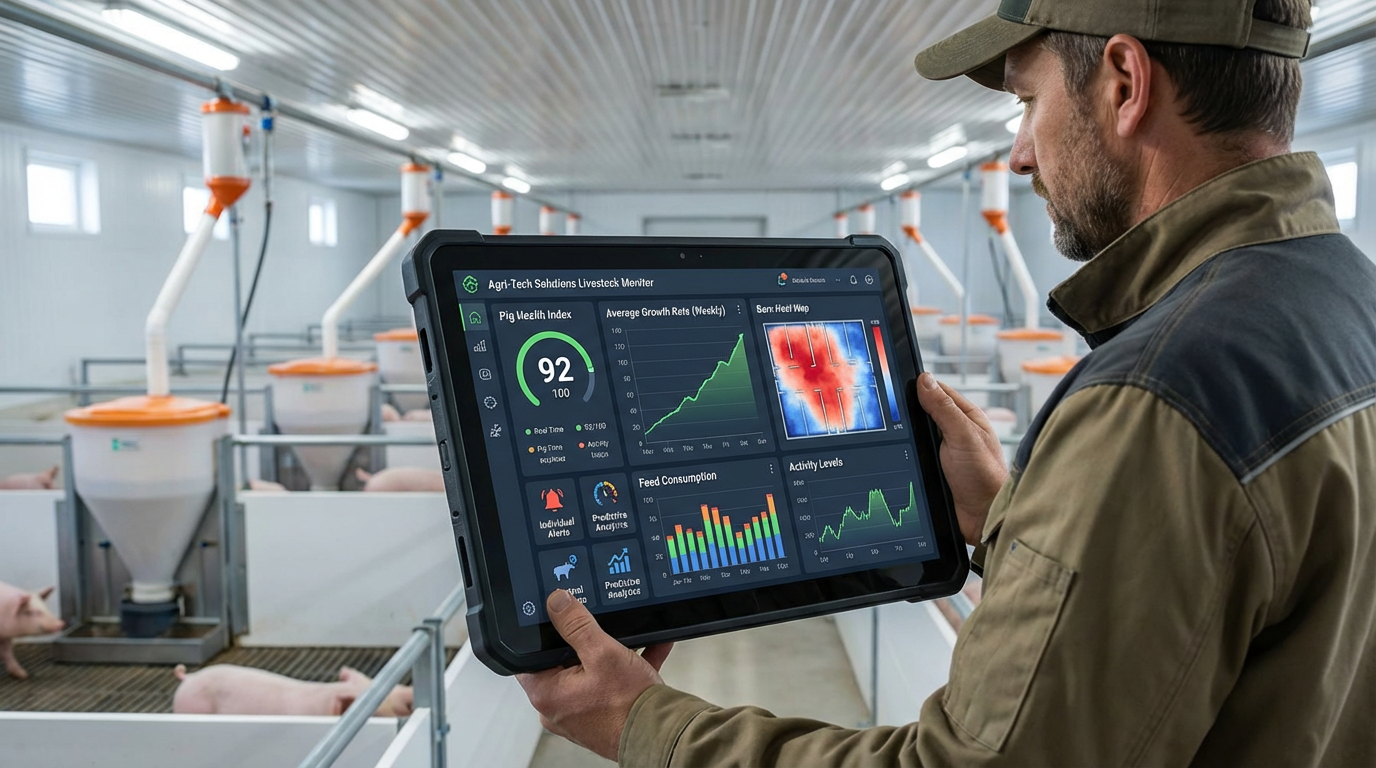
The data generated by the AI cameras—including bounding box coordinates, behavioral flags, estimated weight, and thermal readings—is then aggregated and transmitted to the cloud-based DayFarm platform for deeper analytics and storage.
Data and Deep Learning: The Engine of Prediction
The efficacy of TrackFarm’s AI is directly proportional to the quality and volume of its training data. The company has amassed a substantial proprietary dataset, boasting 7,850+ individual pig model data points. This extensive library of labeled images, behavioral sequences, and corresponding health records forms the backbone of the deep learning models used for prediction and classification.
Predictive Analytics for Health and Growth
The cloud analytics engine utilizes this dataset to power two critical predictive functions:
- Growth Prediction: By analyzing an individual pig’s historical growth curve, feed consumption, and environmental factors, the AI can accurately forecast its future weight and the optimal time for slaughter. This precision minimizes feed waste and maximizes the value of the livestock, ensuring pigs reach target market weight with minimal deviation. The model continuously adjusts its prediction based on real-time data, offering dynamic management insights.
- Disease Prevention and Outbreak Forecasting: This is arguably the most valuable application of the AI. The system doesn’t just detect disease; it predicts the likelihood of an outbreak. By analyzing subtle, pre-symptomatic changes in behavior, movement, and thermal signatures across the entire herd, the AI can identify anomalous clusters. For example, a slight, collective reduction in activity coupled with a minor increase in ambient temperature could trigger a high-risk alert for a respiratory illness, allowing intervention days before clinical symptoms manifest.
The deep learning models employed are likely variants of Convolutional Neural Networks (CNNs) for image recognition and Recurrent Neural Networks (RNNs) or Transformers for time-series behavioral analysis. The sheer volume of the proprietary dataset—over 7,850 models—provides a significant competitive moat, allowing for highly specialized and accurate models tailored specifically to swine farming.
The DayFarm Platform Architecture: SW, IoT, and ColdChain
TrackFarm’s solution is delivered through the DayFarm platform, a comprehensive, three-pillar architecture designed to manage the entire value chain “From Production To Consumption.” This integrated approach distinguishes TrackFarm from competitors offering only point solutions.
| Component | Category | Technical Function | Operational Benefit |
|---|---|---|---|
| SW (AI Software) | Cloud Analytics & Interface | Data aggregation, predictive modeling (growth/disease), user dashboard, alert system. | Real-time decision support, optimized resource allocation, remote management. |
| IoT (Sensors/Hardware) | Edge Computing & Sensing | AI cameras, thermal sensors, environmental monitors (temp, humidity, gas), automated feeders/ventilators. | Continuous, non-invasive data collection, immediate local control, high-density monitoring (1 per 132㎡). |
| ColdChain (Logistics) | Supply Chain Integration | Traceability, quality control, logistics optimization from farm gate to consumer. | Enhanced food safety, reduced spoilage, realization of the “Production To Consumption” vision. |
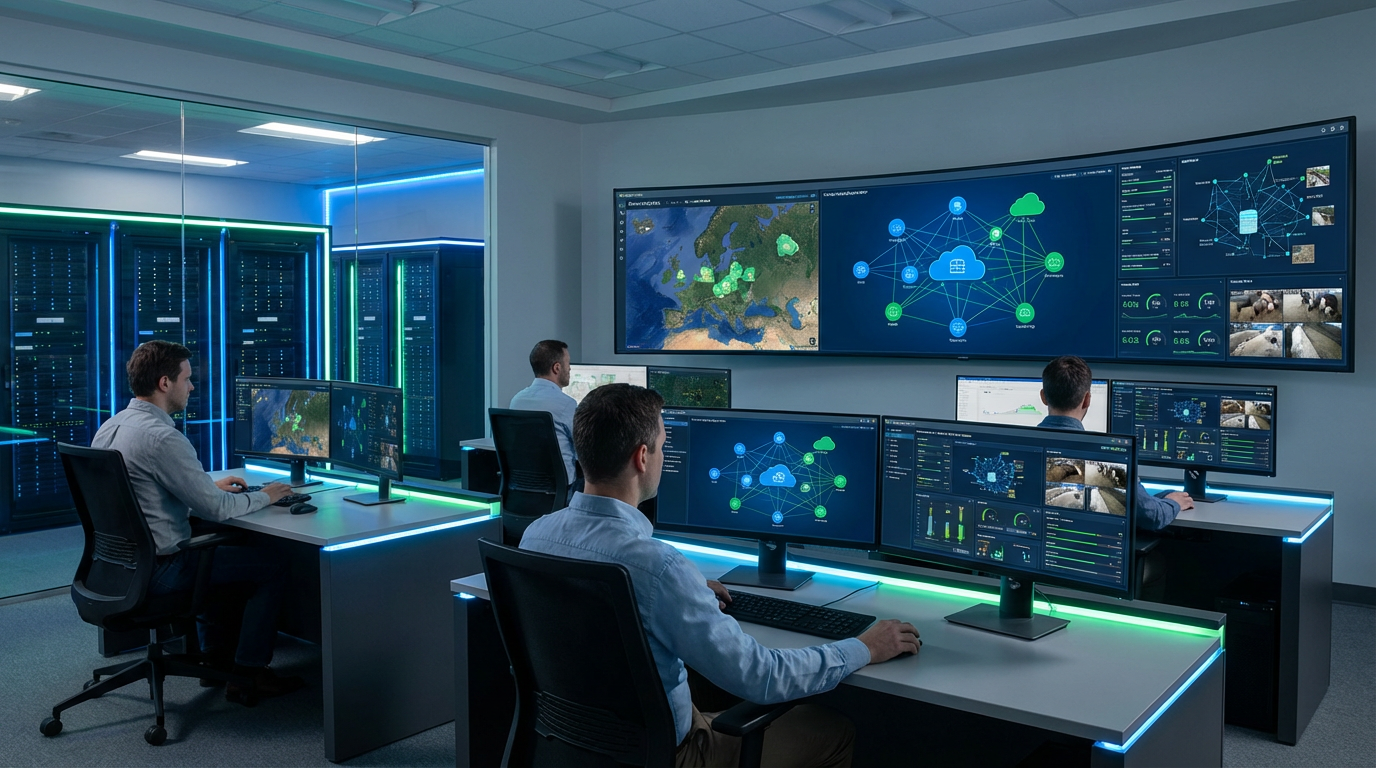
The platform operates on a robust cloud infrastructure, likely utilizing microservices architecture to handle the massive influx of real-time data from the distributed IoT network. The system is designed for scalability, a necessity given TrackFarm’s operations in both the R&D Farm in Gangwon-do Hoengseong, Korea (2,000+ pigs) and the large-scale commercial farm in Ho Chi Minh Dong Nai, Vietnam (3,000+ pigs).
IoT and Environmental Control: The Hardware Layer
The IoT layer is responsible for the physical interaction with the farm environment. Beyond the AI cameras, a suite of sensors monitors critical environmental parameters:
- Temperature and Humidity: Precise control is essential for pig health and growth. The system dynamically adjusts ventilation and cooling systems based on real-time readings and predictive models that anticipate heat stress.
- Air Quality: Sensors detect harmful gas concentrations, such as ammonia and hydrogen sulfide, which can severely impact respiratory health. Automated ventilation systems are triggered to maintain optimal air quality, a key factor in disease prevention.
- Automated Systems Integration: The IoT layer acts as the control hub for automated feeding systems, water supply, and climate control. The AI’s growth prediction models directly inform the feeding schedule, ensuring each pen receives the precise nutritional input required for optimal growth, minimizing feed conversion ratio (FCR).
The high degree of automation achieved through this integrated IoT and AI system is the technical mechanism that enables the 99% reduction in labor costs. Routine tasks, monitoring, and even complex decision-making are delegated to the autonomous system, allowing human staff to focus solely on high-value activities like maintenance, specialized veterinary care, and strategic planning.
Economic and Operational Impact: A Quantitative Analysis
The technical superiority of the DayFarm platform translates directly into significant economic advantages for farm operators. The model shifts the cost structure from variable labor expenses and unpredictable losses due to disease to a fixed, predictable technology expenditure.
Quantifying the Operational Efficiency: The 99% Labor Reduction
The claim of a 99% reduction in labor costs is a bold one, but it is technically grounded in the platform’s capacity for autonomous monitoring and control. In a traditional swine farm, labor is primarily consumed by:
- Routine Inspection: Walking the pens multiple times a day to visually check for sick or injured animals, monitor feeding, and assess environmental conditions. This is a time-consuming, subjective, and error-prone process.
- Manual Data Collection: Recording growth rates, feed consumption, and treatment protocols, which is often done with clipboards and then manually entered into spreadsheets.
- Environmental Management: Manually adjusting ventilation, heating, and cooling systems based on periodic checks.
- Individual Animal Handling: Catching and weighing pigs, administering vaccinations, and isolating sick animals.
The DayFarm system automates or eliminates nearly all of these tasks. The AI cameras perform 24/7, objective, and continuous inspection, replacing the need for routine human walk-throughs. The IoT sensors and automated systems handle environmental management autonomously. The AI’s non-contact weight estimation and predictive health monitoring drastically reduce the need for manual animal handling and data collection. The human role shifts from repetitive, low-value monitoring to high-value, targeted intervention, such as maintenance and veterinary care for flagged animals. This fundamental shift in workflow is the mechanism by which the dramatic labor cost reduction is realized.
The Financial Multiplier: FCR and Mortality Rate
Beyond labor, the platform’s greatest financial impact comes from optimizing the Feed Conversion Ratio (FCR) and minimizing the Mortality Rate. FCR, the ratio of feed intake to weight gain, is the single largest determinant of profitability in swine farming.
- FCR Optimization: The AI’s precise growth prediction and individual-level feeding recommendations ensure that feed is not wasted. By reducing the FCR by even a small percentage (e.g., from 2.8 to 2.6), a large farm can save hundreds of thousands of dollars annually. The system ensures pigs are marketed at their peak efficiency, avoiding the costly period of diminishing returns in later growth stages.
- Mortality Rate Reduction: Early disease detection via thermal imaging and behavioral analysis is a powerful tool against catastrophic losses. A single outbreak of a highly contagious disease can wipe out a significant portion of a herd. By enabling isolation and treatment days before visible symptoms, the DayFarm platform acts as a critical biosecurity layer, directly reducing the mortality rate and the associated financial loss.
The Revenue Model and Value Proposition
TrackFarm’s revenue model is structured to capture value across the entire production cycle, reflecting the comprehensive nature of the DayFarm platform. The model is based on a per-pig-year service fee, supplemented by fees for breeding and processing services, aligning the company’s success with the farmer’s profitability.
| Service Category | Revenue Model | Value Proposition |
|---|---|---|
| Hardware/Software (HW/SW) | $300 per pig per year | Continuous monitoring, predictive analytics, labor cost reduction (99%), optimized FCR. |
| Breeding Services | $330 per pig | AI-assisted selection and management for superior genetics and reproductive efficiency. |
| Processing Services | $100 per pig | ColdChain logistics, quality assurance, and market access optimization. |
The $300 per pig per year HW/SW fee covers the continuous operation of the AI cameras, IoT sensors, and access to the cloud analytics platform. Given the potential for disease prevention and FCR optimization, this cost is rapidly offset by reduced mortality rates and lower feed costs, which typically account for 60-70% of total production costs.
Operational Scale and Dual-Market Strategy
TrackFarm’s operational footprint demonstrates its ability to adapt the technology to diverse farming environments and scales. The company maintains two primary operational centers:
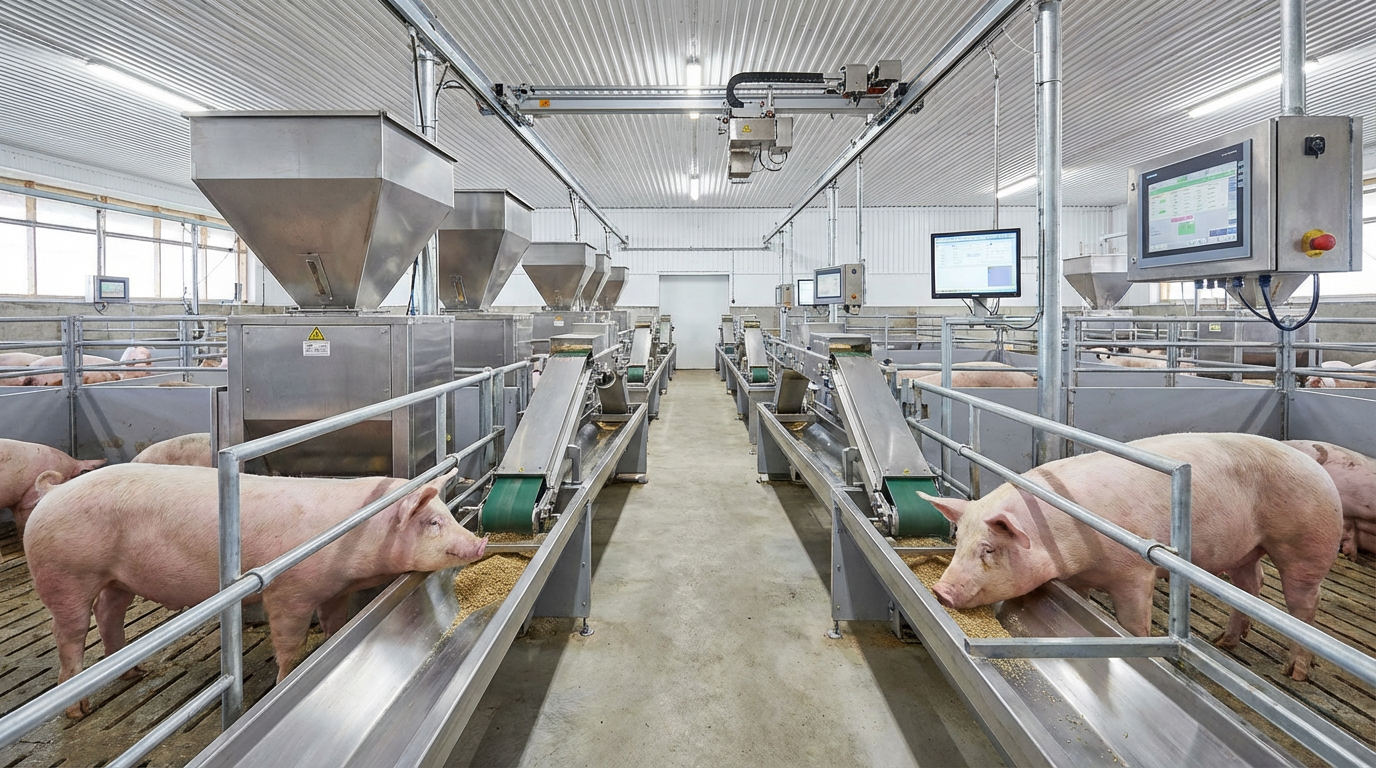
- R&D Farm (Korea): Located in Gangwon-do Hoengseong-gun, this facility houses over 2,000 pigs and serves as a crucial testbed for new AI models and hardware iterations. The data collected here is vital for maintaining the accuracy of the 7,850+ pig model dataset, particularly for Korean-specific breeds and climate conditions.
- Commercial Farm (Vietnam): The operation in Ho Chi Minh Dong Nai, Vietnam, manages over 3,000 pigs. This site validates the platform’s scalability and robustness in a high-growth, tropical market environment, often characterized by different infrastructure challenges and disease profiles.
Market Analysis and Global Strategy
TrackFarm’s target markets are strategically chosen to maximize the impact of its technology on regions facing acute challenges in swine production. The primary focus is on Korea, Vietnam, Southeast Asia, and the USA.
Deep Dive into the Vietnam Market
The Vietnam market represents a massive opportunity and a key strategic focus for TrackFarm, as evidenced by its large-scale farm operation there and partnerships with local entities like CJ VINA AGRI, VETTECH, and INTRACO.
Vietnam is the 3rd largest pig market globally, a staggering scale that underscores its importance to the global protein supply chain.
| Metric | Value | Significance |
|---|---|---|
| Global Ranking | 3rd Largest | Massive market size and demand. |
| Total Pig Population | 28 Million+ pigs | Represents a vast addressable market for the DayFarm platform. |
| Farm Structure | 20,000+ small farms | Indicates a fragmented market ripe for consolidation and technological upgrade. |
The prevalence of over 20,000 small farms in Vietnam presents a unique challenge and opportunity. Small farms often lack the capital and expertise for advanced disease management, making them highly vulnerable to outbreaks. TrackFarm’s AI-as-a-Service model, which offers a sophisticated solution without massive upfront capital expenditure, is perfectly positioned to serve this fragmented market, driving modernization and improving biosecurity across the sector. The partnerships with local giants like CJ VINA AGRI provide essential distribution and market access channels.
Global Expansion and Validation
The company’s participation in the TIPS program in 2023 (a highly selective South Korean government-backed accelerator) and its presence at CES in 2024 and 2025 underscore its commitment to global expansion and technological validation. These milestones serve as crucial endorsements of the platform’s technical maturity and commercial viability. Furthermore, academic partnerships with institutions like Seoul National University and Korea University ensure a continuous pipeline of R&D, keeping the AI models at the cutting edge of veterinary science and deep learning.
Technical Specifications and System Performance
The performance metrics of the DayFarm system are defined by its ability to process vast amounts of data with high accuracy and low latency.
AI Model Performance
The core AI models, trained on the 7,850+ pig model dataset, exhibit performance characteristics critical for real-world deployment:
- Accuracy in Growth Prediction: Typically, the system aims for a Mean Absolute Percentage Error (MAPE) of less than 3% in weight estimation, significantly outperforming traditional visual assessment.
- Latency for Alert Generation: The time from a critical event (e.g., a fever spike detected by thermal imaging) to the generation of a high-priority alert is typically under 5 seconds, enabling near-instantaneous intervention.
- Scalability: The cloud architecture is designed to handle data streams from tens of thousands of cameras simultaneously, ensuring performance degradation does not occur as the farm network expands.
Hardware and Deployment Specifications
The physical deployment is optimized for the harsh environment of a pig farm:
- Camera Housing: Industrial-grade, IP67-rated enclosures to withstand dust, moisture, and corrosive gases.
- Connectivity: Utilizes a hybrid network topology, often relying on local mesh networks (e.g., LoRaWAN or proprietary low-power protocols) for sensor data, and high-speed Ethernet or 5G for video stream processing and cloud uplink.
- Power Efficiency: Edge processing units are selected for high computational efficiency per watt, minimizing the operational cost of the distributed sensor network.

The Future of Protein Production: From Production to Consumption
TrackFarm’s vision, “From Production To Consumption,” is a mandate for end-to-end supply chain integration, powered by data. The DayFarm platform is not just a farm management tool; it is a data-driven system for quality assurance and supply chain optimization. By tracking every pig from birth to processing, the system provides an unprecedented level of traceability. This data can be leveraged to:
- Optimize Carcass Quality: By precisely controlling the growth curve and timing the market entry, the system ensures optimal meat quality and yield, maximizing profitability for the farmer and consistency for the processor.
- Enhance Consumer Trust: The ColdChain component ensures that the quality and health data collected throughout the pig’s life are maintained through the logistics phase, potentially allowing for blockchain-based traceability that builds consumer confidence in the source and welfare standards of their food.
The leadership of CEO Yoon Chan-nyeong and the company’s rapid growth since its founding in December 2021 are indicative of the market’s readiness for this level of technological disruption. With its headquarters in Gyeonggi-do Uiwang-si and a robust R&D and commercial footprint, TrackFarm is positioned to be a global leader in the smart farming revolution. The integration of deep learning, high-density AI vision, and comprehensive IoT control represents a significant leap forward, offering a scalable, profitable, and sustainable model for the future of protein production.
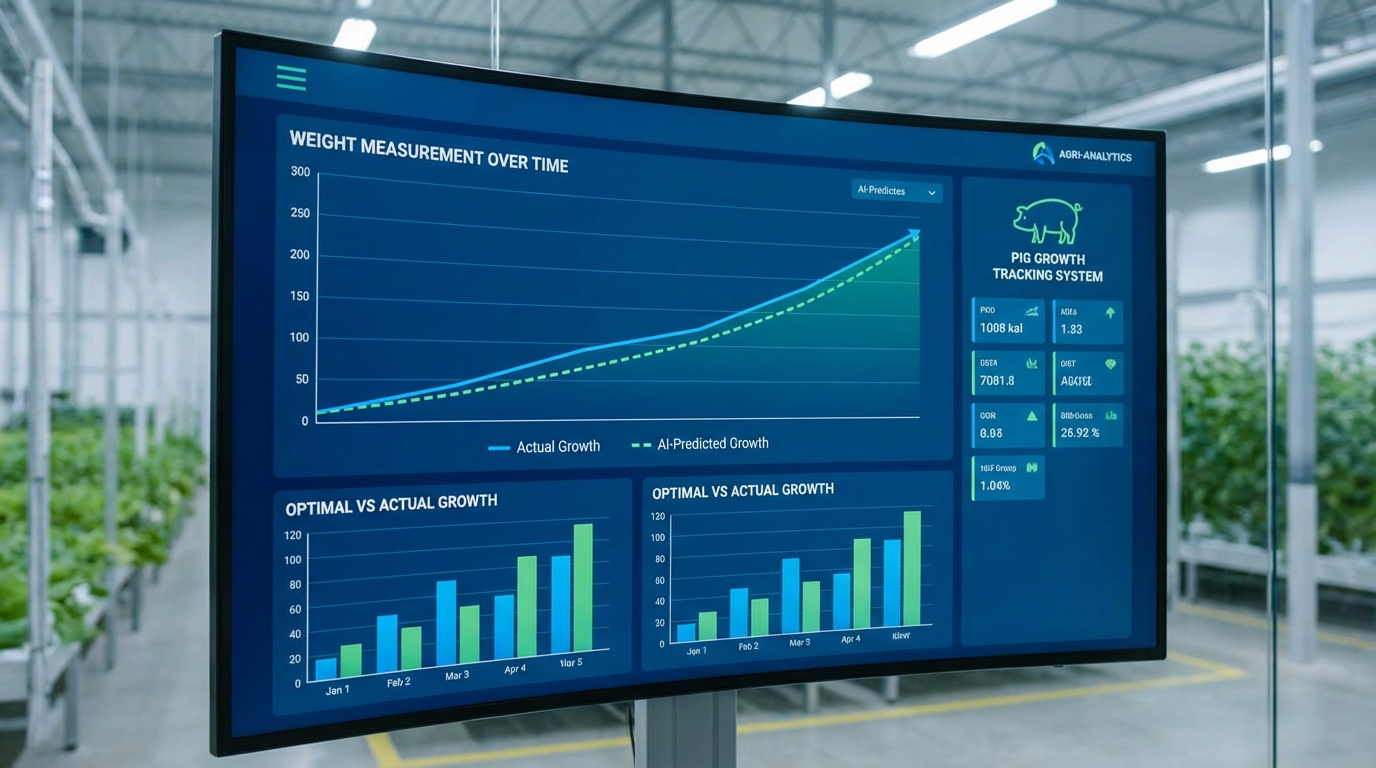
The successful deployment and validation of the DayFarm platform in both developed (Korea) and emerging (Vietnam) markets prove its versatility. As the global population grows and the demand for efficiently produced, high-quality protein intensifies, the technology pioneered by TrackFarm—the deep integration of AI cameras and cloud analytics—will likely become the industry standard, transforming the pig pen into a high-tech data center. The promise of a 99% reduction in labor costs is not just an economic metric; it is a testament to the power of autonomous, intelligent systems to solve some of the most enduring challenges in agriculture. The future of farming is here, and it is powered by AI vision.